Saturday, August 2, 2025

AD&D: Obscure Alignment Rules

Alignment is a touchy subject in the realm of ADVANCED DUNGEONS & DRAGONS. It has evolved quite a bit over the last 50 years, from the three-alignment rule of Original D&D, to the five-alignment rule of later Original D&D and Holmes Basic era, to the nine-alignment model of AD&D and D&D 3E. It was also derailed by the strange alignment line of D&D 4E and then restored somewhat as an ambiguous add-on in D&D 5E. In fact, the game could be played without alignment, except when it comes to alignment requirements or magic item interactions which require a certain alignment or damage those of opposite alignment. In the end, alignment is nothing more than a tool that the DM uses to enforce certain behaviors in the game and reigns in the otherwise destructive behavior of most immature players.

Alignment came about as a way of limiting certain sub-classes that emerged after the creation of the game. Originally, there were only three alignments - Lawful, Neutral, and Chaotic. Since Chaotics were seen to be the "bad guys" who oppose the civilized races, this meant that there were really only two choices for most players in an Original D&D game. By the time the supplements were released, alignment came to be used as a requirement for becoming a member of the new sub-classes like Paladin, Druid, Assassin, or Monk. The alignment system was a line with two points, one at each end, representing Law and Chaos, and one in the middle representing Neutrality.

The Holmes Basic re-write of the original rules seemed to take the original alignments and add in another depth to the structure. Now, if you were Lawful, you could side with good or evil, and if you were Chaotic, you could be good or evil. Neutrals, however, only remained neutral. This is viewed as the "X" alignment model, with Lawful Good and Chaotic Good at the top endpoints of the "X," Lawful Evil and Chaotic Evil at the bottom endpoints, and Neutral where these two lines cross. Why did we need this addition? I think it became obvious that some characters could not be easily defined by simple Law vs. Chaos. The addition of morality to this issue is what most people now contend is the problem with alignment systems. How do you define good vs. evil? Everyone has their own views and opinions, and frankly I don't want to spark a debate on the matter.

Moldvay/Cook Basic/Expert D&D returned to the simple Law-Neutrality-Chaos alignment system, and one can use this and it still works. But in 1977, Gygax was in the process of creating Advanced D&D, and the MONSTER MANUAL seems to have been written from the view of it being a reference for BOTH Original D&D and Advanced D&D. The alignments used in that book are mostly of the 5-alignment system seen in Holmes Basic, with a few exceptions showcasing the new 9-alignment model of more modern games.

When the PLAYERS HANDBOOK was released in 1978, the nine-alignment system model was finally defined. However, there were subtle nuances in the game that might be missed and seemingly contradicted the rules depending on when the books were written or read. I myself came into D&D through the 1981 Moldvay Basic Set, and then later learned AD&D in 1983, not even aware of Original D&D or the fact that these were two completely different game systems at this point. It was obvious to my mind that AD&D grew out of Basic D&D (which is mostly true), but the printing dates were somewhat confusing (as were the references to the "previous" version of the game in the Cook Expert Set). 

Some of the strange rules regarding alignment were in the fine print and foot notes of the various tables for character generation. The fact that alignment is almost inextricably linked into the AD&D game is very apparent when one begins to make a new character. First off, alignment plays a huge part in the selection of any of the sub-classes. One could play any of the basic classes and never bat an eye at alignment (with the exception of the cleric's alignment matching their deity's, and the fact that a thief was never LG or CG). Sub-classes were notoriously difficult to apply for anyway, so most of the classes one ended up playing were base classes, or demi-human multiclassed characters. The assassin is the exception to this rule, with very low requirements for becoming that class, and only an alignment restriction to keep most players from using this class in home campaigns.

So what are these hidden rules? Well, most apply to sub-classes as I suggest, but one in particular recently cropped up while I was creating new characters for a solo-play campaign. Since I was using ONLY the rules in the PHB, DMG, and MM, I went over everything with a fine-toothed comb and noticed a peculiar restriction on page 13 of the PHB. On Character Race Table I there is a footnote to the alignment code of the Cleric being (A)* which normally would mean "any alignment", but in this case it reads, "a cleric cannot be true neutral unless of the druid subclass." Huh, I do remember seeing this long ago, but I have ignored it for many years. This rule makes no sense for any Neutral deity that has nothing to do with nature. In particular, I refer the gentle reader to the WORLD OF GREYHAWK boxed set in which many of the iconic Greyhawk deities are listed as being of Neutral alignment - Beory, Boccob, Istus, Geshtai, Joramy, Obad-hai, Xan Yae, Xerbo, and Zuoken. Of these, Beory, Geshtai, Joramy, Obad-hai, and Xerbo most likely have druidic followers, but Boccob is a god of knowledge and arcane magic who has no ties to the natural world. Istus is a goddess of fate and destiny, having little to do with nature. Xan Yae and Zuoken are monk or thief deities who have nothing to do with animals and plants. Many NPCs of the Greyhawk Campaign are said to worship Boccob, including Riggby the Cleric of Mordenkainen's Fantastic Adventure fame. So, it seems that this rule was even ignored by the author of D&D himself. (Not to mention the fact that Gary states in the Guide to the World of Greyhawk the following: "In general, the greater gods are too far removed from the world to have much to do with humanity, and while they are worshiped, few people hold them as patrons.")

In any case, that is the ONLY instance of such a rule affecting Cleric alignment being stated in the PHB or DMG. The only other place one finds an alignment restriction on Clerics is in the Deities & Demigods Cyclopedia, page 6, under the definition of WORSHIPER'S ALIGN. Here it clearly states, "This refers to the general alignment of those who worship, adore or propitiate the deity. This does not necessarily apply to the alignment of the deity's clerics, which must be identical with their patron's." This book was the last released (1980) and is thus the final word on clerical alignments.

Even the DUNGEON MASTERS GUIDE (published 1979) refused to pin the cleric's alignment restriction under the general heading of Alignment, and instead tucks away its ruling on clerics and alignment on page 38 under the unassuming subheading of Day-to-Day Acquisition of Cleric Spells: "Each cleric must have his or her own deity, so when a new player opts to become a cleric (including a druid), you must inform them as to which deities exist in your campaign milieu and allow the individual to select which one of them he or she will serve. This will not necessarily establish the alignment of the cleric, so at the same time the cleric player character should also state his or her ethos (not necessarily to the other players)." It seems that alignment was not so strict in Gary's own campaign, but he made a big deal of graphing each character's alignment and tracking the changes in behavior to penalize them when it was obvious that they no longer followed what they wrote down. He may have stated the ruling this way to account for some deities who allow clerics of more than one alignment, or who straddled the lines between two alignments. For example, there are plenty of lesser gods and demigods who list three alignments in their listing, chief among these being Erythnul: CE(N), Pholtus: LG(N), St. Cuthbert: LG(N), and Iuz: CE(N). Although this is not clearly defined in the rules, I take this to mean that there can be clerics of either alignment of these deities. Some deities are listed as N(G) or N(L) and I take that to mean that there are druids of these gods and normal clerics with a non-Neutral alignment.

On a side note, if Gary did not mean for there to be any clerics of the Greater Gods, then Beory, Boccob, Istus, Nerull, Pelor, Rao, Ulaa, Wee Jas, and even Tharizdun would have no followers. And according to later material, worship of these beings worldwide or plane-wide is what made them Greater Gods to begin with. So it makes little or no sense for the Greater Gods not to have many clerics.

So, what about the Druid subclass then? They are True Neutral, and it should follow then that they can only worship True Neutral gods, but Beory is a Greater Goddess and thus has few clerics. Seems that most would then worship Obad-hai as the druidic ideal, or perhaps Phyton if of the Suel culture. There are plenty of seasonal gods, but most are not purely Neutral in alignment. Some that would be a dead-ringer for druidic worship, like Phaulkon, CG god of Air, Winds, and Clouds, are of extreme alignments and are not Neutral in any way. I believe that the footnote in the PLAYERS HANDBOOK is an archaic rule that has been ignored by many over the years and generally forgotten.

I find it strange that sub-classes all have alignment restrictions. It seems that there is little else to keep people playing the base classes unless they disagree with alignment restrictions. The most strict are the LG requirement of paladins (well, that and the requirement of 17+ in Charisma) and True Neutral for druids (which is harder to play than most people assume). Rangers only have to be of Good alignment which allows leeway between Law and Chaos. The same applies to Assassins who can only be Evil, but can run the gamut between Law and Chaos. Illusionists are the ONLY subclass without an alignment restriction, but they need ridiculously high Intelligence and Dexterity to qualify. There are alignment restrictions for some of the base classes as well including Thief (any alignment except LG or CG), and Monk (any Lawful alignment). Bards (if allowed in the campaign) are limited to remaining some flavor of Neutral, but that means they get 5 choices and still get all the powers and spells of a druid at higher levels (and are able to use metal weapons and armor as well).

So what happens if you change alignment? In the grand scheme of the game, it makes little difference if your LG character suddenly decides to be NG instead, but it should have some repercussions in the grand scheme of the campaign. Remember, the outer planes (and thus, your chosen afterlife) is tied to alignment. A shift of one degree has little effect on what happens to your character's soul, but a second shift could mean condemnation or redemption. In a world where life is cheap and death lurks around every corner, it would concern almost every individual as to what happens to you when you die. Look at the religious obsession of those folks living in the Middle Ages, when war, plague, famine, and other disasters (natural or man-made) meant that life expectancy was not long. They strove to remain on the straight and narrow to ensure they did not end up frying in the pits of Hell, but were instead rewarded in Paradise. Even the warlike Vikings tried to live up to their warrior ideals in order to make it into Valhalla. So, although alignment might not have a powerful effect in the game, it would be very important to most of these fictional characters.

In order to keep the players on track with their chosen class (and alignment), certain restrictions had to be put in place to enforce proper behavior at the table. Hence, you could only continue to be a paladin if you behaved in a manner according to your vows (Lawful) and benevolent faith (Good). If you no longer wanted to behave correctly, or ignored your vows and obligations to your fellow men, then you would no longer receive the blessings of the gods and would fall from grace to be a fighter from then on. Interestingly, the rules do not say that he cannot then advance in experience as a fighter - the ex-paladin simply has none of the powers of his former class. It also does not say if his experience points are converted downward to be those of a fighter. After all, a fallen paladin with 140,000+ experience points at 7th level, would actually become an 8th level fighter, thus gaining an extra 1d10 + Con bonus in hit points. However, I think one has to use the Alignment Change rules in the DMG along with this rule to make it work.

Changing Alignment is listed on page 25 of the DMG, and it warns that changing of alignment is a serious matter. For clerics and druids, it is very serious, as changing alignment might mean a change of deity or loss of druidic powers. The last sentence of 2nd paragraph is most curious: "Change of alignment will have an adverse effect on any class of character if he or she is above the 2nd level." I take this to mean that new characters have a grace period to lock down their alignment. Sometimes it's not easy to decide how to play a character until the game begins. A decision made during character creation may suddenly seem like a bad idea once you start adventuring and "finding your character's voice." Of course, your class choice in some cases is tied to this alignment, so you really should do some research before agreeing to play a role that you are uncomfortable in. The penalties for alignment change thus do not really apply until one is 2nd level or higher.

Again, stability of the character is key here. Sometimes players are in a strange mood when they begin a session and their character is made to do some hilarious or "out of character" things that can bog the game down or create bizarre conditions when interacting with NPCs or monsters. Since the game should be fun for all, and Gary seemed to have been a fan of verisimilitude, characters should not act silly or insane in most instances.

So what are the consequences of alignment change? Well, it depends on whether or not the character intentionally changes alignment or is forced to do so through magical means. It is stressed here that radical alignment change is only the result of magical means or insanity. Normally, alignment change takes place in gradual steps and is considered voluntary. Radical alignment change is usually involuntary and the character usually wants to return to their former alignment. Thus the first is a permanent change with a penalty; the latter is a temporary change with a temporary penalty.

Upon changing alignment, the character loses a level of experience, dropping experience points to take them to the very beginning of the next lower level. This is worse than being energy drained by a wight or wraith, since in that case the character only loses enough XP to drop to the middle of the next lowest level. If the alignment change is involuntary, then the character can regain the lost level upon returning to the former alignment as soon as possible, and after making atonement through a cleric of the same alignment (and sacrificing treasure equal to 10,000 g.p. per level of the character - depending on the generosity of the DM - or performing a quest). The alignment must be restored before the atonement can take place.

Characters who voluntarily change alignment (or drift into a new one) can only change it one place, and the level loss is permanent. They also must suffer a severe disability when using their alignment tongue until they regain their former level of experience. A True Neutral character must become one of the Neutral alignments on the outer wheel of the alignment graph first. A character will suffer level loss and other penalties each time they change alignment. Gary recommends that this penalty NOT be explained to the characters at the start - he wants to let them know the ramifications of the change only AFTER it has occurred. This shock value hopefully keeps those who "seek to use alignment as a means of furthering their own interests by conveniently swapping one for another when they deem the time is ripe" from being fickle, and penalizes those who do.

Now you understand why this penalty only kicks in at 2nd level and above. Alignment change effectively resets a 2nd level character to the beginning of 1st level. If this occurs to a paladin or druid, then they simply stop being their former class and begin again as a 1st level fighter or cleric. It also prevents the nastiness inherent in level loss; namely the loss of adventurer status if reduced to 0-level (such as can occur if surviving a strike by a wight or wraith).

Alignment comes into play for most other classes when they attempt to use magic items with alignments that differ from their own, or encounter magical spells or effects that have different effects based on the caster's own alignment. For instance, when using aligned weapons opposing your own (or touching certain tomes or aligned items of a diametrically opposed alignment), the result is usually damage or subversion. Characters of a particular alignment can affect those of an opposing alignment with certain spells (like holy word or repulsion). It is really unclear whether protection from evil affects mortal creatures of the Prime Material Plane, or if it only really affects extraplanar creatures who are intrinsically of the same alignment as their outer planar home. Paladins and clerics are very tied to alignment, so I assume that such spells would affect them, but a common person deemed to be good or evil might not be affected. Again, alignment is an unclear indicator in this case. The detect evil spell (or paladin ability) seems to indicate that evil alignment is detected, but also states that there must be evil "emanations" to detect. A demon would decidedly detect as evil, as would an evil-aligned artifact, but a common person with bad intentions? This is not clearly explained in the rules, and has caused much confusion over the years.

The DMG tries to clear this up on page 60. Here it states that only a know alignment spell can definitively determine the alignment of a character or creature. It must be great evil or good to be detected with a detect evil/good spell. Characters who are strongly aligned, do not stray from their faith (alignment), and are relatively high-level (at least 8th) might radiate evil or good if intent upon appropriate actions. Powerful creatures of an extra-planar nature always emanate their evil or good. Aligned undead (not unaligned or "Neutral" undead) radiate evil, since it is this negative force that animates them. In any case, no emanations are detectable without magical means to do so.

Magic items of an aligned nature will naturally detect as evil or good, but neutral ones will not. Holy water detects as good, while unholy water detects as evil. The same can be said for sites or items consecrated or desecrated to be used by those alignments. But normal items will never radiate evil, even if their use is considered evil (poison, for example).

Alignment has many uses in an AD&D game. Ignoring it means changing whole sections of the rules, including character classes, monsters, the cosmology of deities and outer planes, and how certain magic items and spells work. The subtle nuances that alignment brings to the game are interesting and usable if the players and DM can simply understand why it exists and how to use it properly. Don't think of it as a straight-jacket, but rather a guideline for how to play the game in the manner the rules were intended.

Saturday, December 7, 2024

D&D Premises: Heroes vs. Villagers

 I find that most D&D players are firmly entrenched in two different camps when it comes to adventurers: you either believe that adventurers are epic heroes following a path to glory and start out as above-average; or you believe that anyone could be an adventurer and that you start with what you've got and make the best of it. I am a follower of the latter camp, but I can see the reason why others would want to be members of the former camp.

D&D is an adventure game. Some prefer to call it a hobby; others refer to it as a role-playing game. But at its heart it is just a game we play to have fun. Fun is different things to different people. Some people enjoy being the best character they can be, racking up accolades and experience points by overcoming each and every encounter without a scratch or loss of consumables or daily-use powers. Some folks just like sitting around a table with friends and spending an evening chatting in character with NPCs or developing intricate backstories for their beloved alter egos. Others prefer tracking numerous statistics on detailed character sheets or expertly mapping mega-dungeons and drawing up plans for castles or wizard towers. The game can be this, and much more, for those who choose to play.

The Dungeon Master has to cater his campaign world to entertain his players. In order to do that, the DM has to KNOW his players. Creating a new campaign for almost complete strangers is hard to do, especially if you get the formula wrong and put in things that only you enjoy. If you are a heroic gamer who loved lots of combat, you will be bored out of your mind if the first adventure is nothing more than a murder mystery or exploration romp through a local abandoned keep. Again, the DM has to have some sort of indication from the players as to what they enjoy. The easiest way to determine the tone of the campaign is to ask them if they prefer to play heroes from the start, or if they prefer to play common folk who become heroes in the course of play. This simple question can affect the method of rolling ability scores and saves you from causing a total-party-kill (TPK) that might turn some people off from playing the game at all.

I've mentioned my own thoughts on this topic in my article entitled Hopeless Characters. I prefer letting the dice determine what I CAN be, instead of starting with a preconceived notion of what I WANT to be. I also prefer having fewer choices presented in order to keep the character creation process to a minimum. If it takes longer than an hour to roll up a character, the system may be intricate but what happens if your character dies? Do you then leave the group to begin work on a new character? If you have a simpler system where choices are eliminated by random rolls, then you can get back in the game quicker!

D&D writers have seemingly swung to both extremes on this topic. Gygax originally had all players roll 3d6 in order for ability scores - you could play whatever you wanted, but if your prime requisite was low, you suffered an XP penalty which slowed your advancement in your chosen class. You could play a weak fighter, a moronic magic-user, a foolish cleric, or a clumsy thief. However, ability scores meant much less in play in the early days of D&D. In AD&D 1E, Gygax stipulated that player characters were a cut above the common men and women in the campaign world - they could advance in level while everyone else was stuck at 0-level. Even in the DMG (under Henchmen), he stated that:

"Human and half-orc characters suitable for level advancement are found at a ratio of 1 in 100. Other races have an incidence of 1 in 50. However, as most of these characters will be other than low level adventurers and already in a situation they are satisfied with - and humans more so than other races, unless the development of the area is primarily other than human - about 1 in 1,000 population will be interested in offers of employment as a henchman, NOTE: This figure must be adjusted by the DM according to the locale, for if it is an active adventuring area, the incidence of prospective henchmen might be as great as 1 in 200, while if it is a settled and staid area, incidence might be as low as 1 in 5,000."

OK, so that quote is talking about henchmen, not player characters. But if you take a look at the world in which you will be running a campaign, not everyone in the local village has a character class. In fact, they should NOT have a character class if the above means much at all. If we assume to have a party of 8 player characters, and they are all from the same starting area, then they are likely the ONLY characters of level-advancing ability from that community. Which means, that everyone else they meet in that community are 0-level humans without any class abilities whatsoever. How about the ruler of the community? How about the king? What prevents the PCs from taking over every community they enter simply because they have abilities that everyone else does not have?

These are the kinds of questions you have to ask yourself before coming up with a campaign world. These premises are not well explained in the various rules sets that have been released in the past. In fact, based on the quote above, one would assume that the local baron who inherited his position is likely to be a 0-level human, as is the local town guard captain, or the local cleric in the temple. However, if one looks at D&D modules from the beginning, this is not so. In fact, so many of the NPCs have character classes that it's hard to separate NPCs from PCs or henchmen in these adventures. Later edition adventures give EVERYONE a character class of one type or another and allow advancement for everyone! So how special are those PC adventurers then?

My belief is that D&D characters are meant to be common villagers and everyday people who obtain training and power from their conversion into 1st level characters. Their decisions and goals are the same as those who might begin the game as noble warriors and mighty wizards, but it is the journey to the goal that is where the fun lies, not the actual achievement of fame and fortune without effort. From a DM perspective, you want to keep the players hungry for more, looking to empower their characters to better survive the rigors of a perilous journey or despicable dungeon. If they begin capable of taking on all comers and emerge without a scratch, the game becomes rote and boring to the players and they seek thrills elsewhere. There are some players who just crave human interaction and don't care much about what happens to the characters in any case, but these are happily few and far between.

Loss is an important part of character growth as well. Losing a battle, a powerful magic item, or even a portion of the character's body is possible in the game. If the player cannot deal with the loss and emerge better for the experience, then they miss out on an aspect of "character development." Heroic players see losing as just that, and many deal poorly with it. "Commoner" players see losing as  development of the personality of their character - one can learn more from a loss about who they are and the nature of their character.

OK, all this being said, I noticed that almost all the NPCs in modules have character classes and are NOT simply 0-level humans. Remember, the premise behind original D&D was that rulers of communities were once 1st level PCs who achieved greatness in adventures and are now Name Level rulers of dominions, temples, towers, or hide-outs. The goal of OD&D was to become one of these leaders to then wage wars against other name level leaders and acquire lands and political power in the region of the campaign world. That is NOT the current goal of the game, since those rules were essentially removed in 3rd edition D&D and beyond. Now, only increasing power is the goal typical among players these days.

But again, how did all those common shop owners, temple acolytes, and common bandits the PCs encountered in early adventures become classed-characters? If only 1 in 100 characters in a region are suitable for character advancement, then how do you explain a village like Hommlet with over a dozen high-level classed NPCs all living in a community of about 250 people? The answer is simple - to deter the Heroic players from overtaking the village simply by having abilities and powers not common to the normal humans therein. If a heroic player sees there is little chance of success, they will not attempt an action. The "Commoner" players will not even attempt this since they see all characters as essentially equals, only with different motivations and abilities. Some NPCs in modules are so powerful, one wonders why THEY don't perform the mission that they get the players to do, since it would be child's play for them to do it. Again, this is a game... Some suspension of disbelief has to be used in order to advance the story or get the players into the adventure. Besides, not all NPCs wear a placard around their neck announcing their level, class, and hit points. Like alignment, not everything about an NPC is obvious from casual observation or conversation. Only by interaction can one deem the worth or power of an adversary or ally. Here is where the Heroic player gets into trouble by bragging or mouthing off, whereas the "Commoner" player seeks to engage the NPC as an equal, respecting the artificial rules of engagement when dealing with anyone outside their knowledge.

Besides, if PCs were actually all Heroic characters, then it would take much more effort to train for next level since anyone of high-level would be few and far between. There would be a much smaller percentage of the adventuring classes that are name-level, given attrition and death rates. In this case, the demi-humans would likely be the most powerful and highest levels, since their abilities allow them to survive better than humans. However, if humans are really just common characters with heroic outlooks on life, then they all have the same ability to advance and in this case the faster-breeding humans would dominate higher levels simply due to probabilities and superior numbers.

This is starting to ramble a bit, and I apologize. I've just been reading over modules from the 80s through 3rd edition and it seems to me that this issue has never really been addressed before. While Gygax kept telling us that PCs were a cut-above the common man, all his villagers were classed NPCs of one sort or another, and all guards seemed to be members of the Fighter class. Why couldn't a common man just wear armor and wield a sword once he was shown how? Sure, he wouldn't be as skilled as a 1st level fighter PC, but that's how it goes. Why does the jeweler have to be a 3rd level thief? Why make the bartender a 2nd level fighter? Why do all lords and ladies need to be name level character classes? If all of these NPCs in the world exist with class levels, then doesn't that imply that ANYONE can be a classed character? Doesn't that mean that PCs are NOT the cut above the rest, but are instead just another commoner taught to swing a sword or cast a spell?

Saturday, May 4, 2024

D&D Basic: Entering Hommlet


Well, it has been a while since I've published anything on this blog. To be honest, I've been dabbling in D&D 5e and trying to get a feel for how the system works. It's not terrible, but I'm feeling like the balance is way off. Characters are too powerful at low levels, but the monsters are somewhat neutered in power, and treasure is next to meaningless to the party as a whole.

In order to feel better about running such a campaign, I've been decompressing by randomly rolling Basic D&D characters and doing some solo play in B2: Keep on the Borderlands. However, since I've been running the 5e campaign in Greyhawk, and using T1: The Village of Hommlet as the starting point, I've decided to convert the characters backwards into D&D Basic stats. The characters in the 5e campaign are: Brother Brassid, a human cleric of St. Cuthbert; Giaeya Larenhael, an elven druid with a spy background; Bru Goldenaxe, a dwarven fighter with an acolyte background and worshipper of Ulaa; and Oblaho Gorung, a half-orc monk follower of Rao, the Lord of Peace. Converting some of the characters was somewhat challenging, except for the cleric and the dwarf.

A few notes here - druids in Moldvay Basic do not exist. I don't like using Mentzer Basic because of the changes made to the original versions to make everything level evenly. I make druids be a choice for clerics of Neutral alignment only. Such "druids" adhere to religious rules, not game rules. If these rules are flaunted or broken, then they have angered their patron deity and suffer the penalties listed in the Expert rules. The strange part of this is that these "druids" can turn undead; but this isn't as strange as expected since undead are basically the antithesis of life, which is important to druids. The druidic religion abhors metal, so they are limited to using wooden or stone weapons like spears, clubs, stone maces, staves, slings, stone axes, and stone knives. They also wear only leather armor and must use wooden shields. Lastly, their spell selections must deal with the natural world. Since most of the Moldvay cleric spells are nature-related, this is not very limiting at all. I also like the idea of adding certain spells to the cleric lists from the World of Greyhawk Campaign setting. Despite the fact that this was written for AD&D 1st Edition, it can still work just fine in Basic/Expert D&D, so long as the characters abide by the spirit of the rules.

Alright, so the elven druid and the half-orc monk have no direct translations. I took the elf as is as the Elf class, eliminating her druid class, but making her a follower of Ehlonna of the Forest. She had only a few spells as a druid, so I opted to grant her the magic missile spell as her Elf class spell for 1st level. She was an archer in 5e so I made sure she had a bow as an elf. I kept the leather armor to make her movement faster than the others in the party. She was LG in 5e, so she is Lawful in Basic D&D. Elves are not sneaky in Basic, so her concept as a spy suffers a bit here. The good news is that she is not limited in her weapon and armor selections, so she can take sword as her melee weapon.

The half-orc race does not exist in Basic D&D. The closest I can come is a homely human. The monk class also does not exist in Basic D&D, however unarmed combat is a thing (see Expert Rulebook) and it could be that this is just another religious type class. However, I didn't see Oblaho as a cleric during play. He was much more of a physical monk, so I decided to make him a Fighter. Due to his religious upbringing in a monastery, he cherishes Rao, the Lord of Peace. Since he is a warrior-type, he was politely asked to leave the monastery after being trained in how to make unarmed attacks. His 18 Strength helps him immensely with this, since unarmed attack damage is a base 1-2 points + strength adjustments. Therefore, Oblaho can cause 4-5 points per strike. Unlike the monk class, fighters in B/X only get one attack per round. In keeping with his monk-like upbringing, he does not like to wear armor, but being a human Fighter he can wear leather armor and not be too slowed. His original weapon was a staff in 5e, making 2 attacks each round and doing a lot of damage. In Basic/Expert, a staff causes only 1d4 base damage, so I decided that he would use a pole arm instead, causing 1d10+3 points of damage per hit, but striking last in a round. There are no throwing stars in this version of D&D, so I gave him 3 normal daggers he can throw. Lastly, I gave him a sling as a missile weapon. His stats are very good, so he ends up with AC 6, 6 hit points, and MV 90' (30'). He may not have all the special abilities of a half-orc monk, but he is only 1st level and wouldn't have too many abilities anyways.

The party, having been converted, is outfitted with what I can remember from the first couple of sessions. We actually ran an overland travel adventure from Narwell to Hommlet (since the original adventure says that the characters came up from the Wild Coast), but I decided to simply start them in Hommlet for the Basic run. Having gone through the first three chapters of the D&D Basic rules covering the basics, character creation, and spells, we're now at the Adventure chapter. Having read the intro to the characters, they have organized the party and realize that they are too few to take on an adventure since average party sizes are 6-8 characters. They decide to enter the village and look for rumors, retainers to hire, and directions to where these bandits might be found.

After spending a few days wandering around the village and speaking to folks in the Inn and various shops, the characters have learned that the village was oppressed by the Temple of Elemental Evil in the past and the bandits in recent times seems to indicate that the Temple is rebounding from their defeat. The village was dominated by an agent of Chaos in a nearby moat house about a league along an old path off the High Road. They decide to organize and head out to explore the ruins. The cleric is voted as the Caller for the group. The Mapper is decided to be Oblaho. Metal miniatures are used to indicate marching order, but since the party is so small they decide that Oblaho and Bru will be up front, followed by Brother Brassid and Giaeya. The party moves at 60' because of the metal armored dwarf and cleric (Encumbrance rules are being used). Oblaho and Brassid have torches since Bru and Giaeya have infravision. While in the village they hired on Spugnoir as the least offensive of the options available. He is so feeble at 2nd level that he is in the middle of the party and has his detect magic and sleep spells prepared for the day.

Since this is Basic D&D, and the focus is on the dungeon at this level, no random encounters are rolled on the way to the moat house. The party has to clear the path to the moat house since it is overgrown. The distance to the moat house is 1 league (or 3 miles). Overland travel in D&D is calculated by taking the normal speed of the party (60'/turn) and dividing by 5 to get miles per day of travel afoot. This results in 12 miles. Since the party is only going 3 miles, this should only take 1/4 of a day. Assuming that the travel day is 10 hours long with breaks, this should take the party 2½ hours. However, since the path is overgrown and they must clear it as they go, it will actually take twice as long or 5 hours. Essentially, the party arrives at the moat house by midday. 

Brother Brassid, Cleric of St. Cuthbert: AC 3 (chainmail & shield, Dex), 1st level Cleric, hp 4, MV 60' (20'), #AT 1 weapon (+1 to hit), D by mace or club (+1 str bonus), SA turn undead; Str 14, Int 13, Wis 17, Dex 13, Con 12, Cha 8.

Bru Goldenaxe: AC 5 (chainmail), 1st level Dwarf, hp 6, MV 60' (20'), #AT 1 weapon (+1 to hit), D by battle axe (+1 str bonus) or crossbow, SA infravision, dwarven detection; Str 15, Int 9, Wis 12, Dex 12, Con 15, Cha 9.

Oblaho Gorung: AC 6 (leather, Dex), 1st level Fighter, hp 6, MV 90' (30'), #AT 1 weapon or unarmed (+3 to hit), D by pole arm, dagger, sling or unarmed (+3 str bonus), Str 18, Int 12, Wis 15, Dex 14, Con 15, Cha 10.

Giaeya Larenhael: AC 5 (leather & shield, Dex), 1st level Elf, hp 5, MV 90' (30'), #AT 1 weapon (+1 to hit), D by sword or longbow (+1 str bonus), SA infravision, find secret doors 2 in 6, spell (magic missile); Str 15, Int 15, Wis 12, Dex 15, Con 13, Cha 13.

Spugnoir (NPC): AC 8 (Dex), 1st level Magic-user, hp 4, MV 120' (40'), #AT 1 weapon or spell, D by dagger or spell, SA spells (detect magic, sleep); Str 11, Int 15, Wis 11, Dex 15, Con 14, Cha 7. 

Upon the party's approach to the ruins they note the collapsed sections of the walls and towers and the fact that the drawbridge is down. They hear loud croaking in the marsh grass nearby and swarms of flying insects fly around their heads and bite exposed flesh. They organize into their marching order and one torch is lit and handed to Spugnoir in the center of the party. Despite the fact that it is midday, they want to explore inside the ruins and don't want any surprises if there are deep shadows in the courtyard of the structure.

That's about all for this session. Next time we'll begin with Chapter 5: the Encounter!

Monday, January 2, 2023

B2: Of Monsters and Gygaxian Wisdom

I know it's been a while since I've posted anything on this blog, and I apologize. The last six months have been a whirlwind of activity for me. My job still consumes many hours of my day, and my age is preventing me from remaining awake as often as I'd like. Throw in a new World of Warcraft expansion and the fact that I've been DMing again for the first time in 2 years, and you can see where all my time has gone.

However, as it is the holiday season, I find myself bereft of players and with some time off. So, naturally, I have been waxing nostalgic on my favorite game of all time: the Moldvay version of Dungeons & Dragons (c. 1980). Nothing, and I do mean nothing, inspires me more to be a DM than a read-through of any of the classic modules and rulebooks. There is an evocative essence of danger and intrigue in the illustrations and rules used for this game that simply gets me in the mood and reinvigorates my passion for this hobby.

Last night, while watching YouTube videos on Old School Gaming, I started pulling out the old modules from my youth. Chief among these adventures is B2: The Keep on the Borderlands. Penned by Gygax himself as an introductory adventure, this 28-page module contains a wealth of advice, wisdom, and  information that one did not even begin to understand until the third reading or more. I remember being puzzled by how I was to run the game - my 10-year-old self was used to boardgames with dice, but nothing so free-form as a D&D adventure! It wasn't until the age of 13 that I began to understand; it would take many more years before I truly appreciated the history of this work. And even now, I marvel at the minutia contained within these pages.

Whole campaigns have begun within the Lawful Keep, poised on a border with encroaching Chaos. The lawless lands surrounding the Keep and the obvious antithesis of the orderly Keep, the Caves of Chaos, display the main themes of the Basic D&D game. These same divisions were carried over into AD&D from its inception as the "new model of gaming." However, Gygax let some elements of AD&D slip into his creation that did not truly exist in the basic version of the game. If Basic D&D was to become the doorway into Advanced D&D, the rulebooks did not particularly show this. But the products released all had similar rule structures and in essence were the same game. What I did not know at the time was that Basic/Expert D&D was nothing more than a cleaned up version of the original D&D game first published 6 years earlier in 1974 but play-tested some time before that! As such, some nuances peculiar to the development of the AD&D game crept into the Basic version and were used to describe monsters and situations in the Keep on the Borderlands module.

Take the cover image above, for example. This beautiful but simple illustration by Jim Roslof epitomized what the D&D game was all about - Lawful or Neutral characters struggling against Chaotic monsters. What I find peculiar is that the action is taking place outdoors, when D&D Basic rules were written for Dungeon adventures. It is obvious that this encounter is taking place outside the Caves of Chaos, perhaps a random encounter on the slopes or the PCs were forced to retreat after losing a numbers of their fellows within and then pursued by the hobgoblins depicted. How do I know they are hobgoblins? By their relative size, reddish faces with blue noses, and martial prowess with arms and armor. But hobgoblin appearance is not explained in OD&D, B/X D&D, or even Holmes Basic rules! The first description we have of these humanoids comes from the AD&D Monster Manual written 3 years earlier in 1977. In fact, the description of the hobgoblins is followed precisely and matches the illustration within the Monster Manual down to the armor worn, facial expression, and the emblem on the helmets! Apparently all hobgoblins have helmets with two winged blades emerging from atop the visor... So what is going on here?

Gygax had cleaned up and embellished the monsters of the game in the Monster Manual in an effort to create a uniform entry for each. By doing so he began the re-write of the game to make it more playable and give the players all the options they had developed up to that point. All the monsters from the original rulebooks and the supplements were included as well as a few new ones dreamed up for publication in the Strategic Review and early DRAGON Magazine. Advanced Dungeons & Dragons had been developed in the remaining two years before the Basic Rules were revamped, so AD&D was fresh in the mind of Gary Gygax when he penned this adventure. Having started several campaigns of his own and doubtless played in others run by his colleagues, he was uniquely qualified to give advice on how to start a new campaign. His introductory explanations of how to run the game were concise, helpful, and inspiring. But you could tell that AD&D had reshaped his thinking of how to construct adventures. No longer was the dungeon the sole focus of the adventure. Now, communities with NPC interaction were part of each adventure he wrote. The Keep is as well defined as it is (even though no names and only sketchy details are provided), because he didn't want anyone running HIS version of the game; he wanted all new DMs to be running THEIR OWN version of the game. Sure, some details had to be provided, but Gygax wanted to hear how others took his bare bones structure and breathed life into it. I'm certain that many campaigns never really got past the first total party wipe in the Caves. But I'm also certain that many campaigns grew out of this humble adventure, giving many players a common ground and a sense of mythic origin that they could all relate to with little explanation.

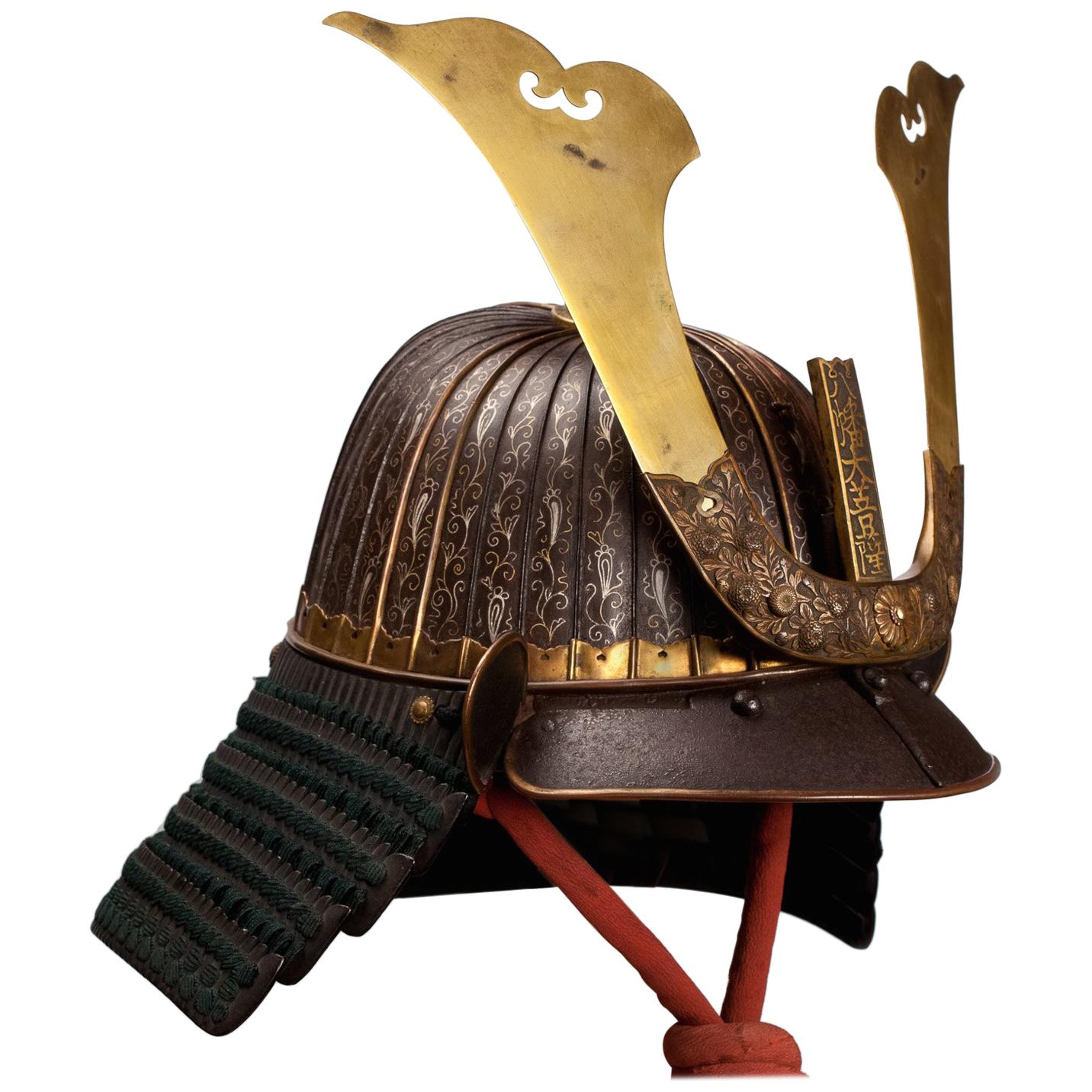
The cover to the module depicts three adventurers (there could have been a larger group lost during an excursion into the Caves, or perhaps these three adventurers represent the remainder that has leveled and become stronger, returning to the Caves after resting and gaining in strength). This small party seems to consist of a Dwarf (lower left, with sword and shield and studded leather armor kilt), a Fighter (middle background with golden breastplate, mailed legs, and helm armed with spear and shield), and an Elf (right foreground, armed with longbow and sword). These adventurers are being attacked by hobgoblins who appear to be either charging to the attack or pursuing the characters who must now stop to fight. The flowering purple tree off the right edge of the picture gives a striking element that contrasts the dull brown hills in the background. At various locations in the hills one can make out cave-like openings; another dark opening seems to exists just below the straddled legs of the elven archer. Perhaps the adventurers sought to come at the hobgoblin lair from above but were attacked by a returning band of raiders! The hobgoblins, as previously noted, are exactly armed and armored as their species is depicted in the Monster Manual. No description of these humanoids exist in the Basic rulebook except as directly relates to size and combat ability, particularly for the leaders. It is noted, however, that hobgoblins are related to goblins (although bigger and meaner) and that they do not suffer penalties to attack rolls in daylight. This could be why these hobgoblins were selected for this sunny cover image, in contrast to the shadowed ravine below. Only hobgoblins, who were not deterred by bright daylight, could have pursued the characters to the top of this ridge! It is curious to note that the armor types depicted were not present in Basic D&D rules. Basic D&D had only Leather, Chain Mail, and Plate Mail armors. The dwarf is obviously dressed in some form of studded leather kilt with a war harness on his upper body. The elf appears to be dressed in black leather armor with metal bracers and helmet. The fighter appears to be wearing metallic armor, but the type is unusual, perhaps Plate Mail of a sort? The hobgoblins are definitely dressed in scale mail and shield, a type of armor that does not exist in the game, but which perfectly describes their Armor Class of 5 as written in the original rules and carried over into the Monster Manual (which specifically depicts them wearing this armor). As stated before, the hobgoblins are all wearing helms with decorative "horns" or "wing blades" attached above the visor. This could be a militaristic designation of rank, but ALL hobgoblins are depicted with this helm style (which resembles Eastern Asian designs, similar to a samurai helm).

Samurai Helmet - 4 For Sale on 1stDibs | antique samurai ...

It's pretty obvious from all this information that Gygax saw goblins as Eastern Asian monsters, invaders from a distant land. Later depictions of goblins showed that they were more Mongolian in nature with worgs replacing horses as mounts, while hobgoblins appeared more Japanese. Oriental Ogres (or Ogre Magi, or Oni) were also added to the mix, so there apparently existed some form of Eastern Asian culture in the original game. In contrast, orcs were portrayed as barbaric savages wearing piecemeal armor, hides, and furs. Their pig-like snouts and greenish skin were, by now, so ingrained in the description of the species that they became a bestial representation of humans. Gnolls were also depicted as barbaric savages, but more along the Norse Viking traditions with huge two-handed swords and battle axes along with long bows and pole arms. Although poorly described in early versions of the game, gnolls became hyena-like when the Monster Manual finally described them and this was carried over into the Basic rulebooks of Holmes and Moldvay. Their dubious origin as a magical cross between a gnome and troll is disturbing to say the least. In the Monster Manual their relationship to trolls is evidenced by their lair association and languages known.

Now, this can all be a bit confusing to a young adult trying to learn Basic D&D for the first time. The depictions of the monsters, although wonderfully produced and accurate to a fault, don't really apply to the Basic D&D game. However, as I have pointed out in numerous posts in the past, the Monster Manual was meant to be used with not only the Advanced version of the game, but also represented a cleaner version of the Original D&D monsters, updated and/or revised for current games. Since the AD&D and D&D products were to be produced side-by-side instead of simply upgrading to a new system, this tome was meant to be a resource for BOTH systems. This is clear from the Monster Manual's lack of certain alignments for the monsters and the sheer numbers meant to be used for wargaming encounters. Even the damage listings are overly simplified, allowing one to use a generic damage rating for a monster, or a more specific rating depending on the type of  monster involved (those using natural weapons remained the same, while those using weapons could be treated as wargame stats or damage by weapon type as desired).

But monsters and their abilities and representations were not the only thing that Gygax adjusted for D&D, he also used his now 8 years of experience with role-playing to explain the finer points of running a game to a novice DM. First, he had to explain what a DM was and what was expected of one. No other game produced at the time took one player out of the mix and elevated them as master of the environment. The DM was the senses for the players, the disembodied and disinterested voice of description, who was also the voice of all other characters in the game, and the final arbiter of any actions made in the game. Imagine a game of make believe on the playground where one person keeps the game moving forward, coming up with new antagonists and situations to pit the players against, and who settled all arguments by the role of a die. This is what the DM is meant to be: part storyteller, judge, actor, rules lawyer, and narrator all rolled into one. No one understood what that meant at the time; the game was too new and not mainstream enough. If only Gygax had turned to television and/or radio to promote the game by example, the outcome would have been better and there would have been less "Satanic Panic" in the 1980s.

The dark themes of the game are what drew me in initially. Fearsome monsters, magical spells, a medieval setting - these were the things that spurred my imagination as a child. I grew up on a diet of old movies, horror films, and sword & sorcery from a young age. Add to the mix the burgeoning comic book market and science-fiction movie industry and you can guess that D&D was the game for me! There are, of course, heroic elements to the game as well. It's basically a "get rich quick" scheme, but with alignment restrictions. If the game were simply about murdering and pillaging, then classes like the cleric and paladin would never have been created. It was first and foremost an ADVENTURE game, where player characters risked their lives to defeat monsters and win fantastic lost treasures. It is akin to knights questing for the Holy Grail, or archaeologists of a martial bent exploring forgotten ruins to bring back lost artifacts to civilization. Still, there were some whose gaming style led more to the "murder-hobo" method of play, but it was obvious that Gygax preferred the former over the latter. Some new players of the game were emotionally immature (I know I was at the age of 12-13), and it wasn't until reaching emotionally maturity that one could truly run a D&D game the way it is meant to be played. There is no definite age when this occurs - some find that maturity does not always equal emotional maturity. I've seen 15-year-olds run a game like a seasoned veteran of 55, and some adults throw temper tantrums when they don't get what they want or the situation doesn't come out as they like.

The rules themselves were completely new to gaming enthusiasts. This is why the game underwent several revisions in the beginning. But the OD&D game version survived well into the next decade and beyond, and in fact became the basis for the restructuring of the 3rd edition (which dropped the "Advanced" in front of the name). I prefer the original version of the game, but spent most of my time in Advanced Dungeons & Dragons as it was considered more "sophisticated" and followed darker themes involving powerful evil forces controlling the adversaries of the world (demons and devils, to be precise). The gods and forces of evil in the multiverse are not defined in Basic/Expert D&D. The choice to include or exclude such things from the game is up to the DM and his or her players. Removing these things, however, leaves a void that tends to simplify the game too much in my opinion. Then again, the openness of the rules and generic qualities of the game are what make it so strong! One can add as much detail as desired to make the system as rich and complicated as AD&D but without all the confusing issues that system uses. Gygax was able to sum up in just a few paragraphs on page 4 of module B2 "How to be an Effective Dungeon Master." Note, he uses the term "Effective" - not the best or greatest. It is enough to be mediocre and still run a game that players will remember for decades! He stresses that the DM is the information link to the players. He or she must be FAIR above all else, but the players should also be wise and cunning, not lazy and arrogant. The DM must balance the adventure to be a challenge without becoming too difficult to discourage further play. The DM must keep secrets from the players until such time as they have figured it out on their own - the overwhelming desire of the DM for the characters to find the hidden treasures or secret doors in his dungeon must be fought. This can sometimes be harder on the DM than it sounds. A good DM never reveals his secrets, but tempts the players to find their own solutions by their own merit. Here is where a DM really shines, by providing enough information to promote character action without giving anything away. This can backfire, like characters ignoring rooms that the DM meticulously describes or spending hours looking for secret doors where none exist. A good DM nudges the players into the right course of action. If the characters are wasting time on fruitless ventures, wandering monsters might appear or rival NPC parties looking to score an easy haul from a weakened group of adventurers. If the party is stuck, a course of action can be suggested, but should be given as friendly advice from an NPC in town or perhaps a rescued captive in a dungeon or wilderness lair. Neophyte players will make mistakes - some fatal - but these are lessons learned and how one learns to play such games. Repeating the same mistakes over and over will quickly end up with a stable of dead characters who never progress beyond 1st level. Only after some loss will it become evident that a player has learned enough to level his or her character.

Gygax also uses the first few pages of the adventure to explain how to track time in the campaign and why this is important. The division of treasure and computing of experience are also explained, along with good examples of how to do it. Unlike AD&D, Basic/Expert rules give no experience award for magic items - such items assist the characters in the furthering of their adventure and thus are either used up or possibly lost or damaged in the course of play. Thus only non-magical treasures secured in one's possession are considered for experience. Also explained is how retainers (or henchmen) are treated when splitting treasure and awarding XP. Lastly, advice on how to prepare for the use of the module is given - something that is glossed over in later editions of the game. Gygax wanted the DMs to be conversant with the adventure - so reading once through, then giving a 2nd and possibly 3rd reading to fully understand important plot points, methods of attack and defense, and how treasures are hidden/guarded was of vital importance. A suggestion to map out frequently visited buildings was made to give the players a feeling of stability and verisimilitude in the Keep.

Once the DM is familiar with the module he reads the players the Background of the adventure before or after they create their characters. This is a vital concept, since it allows the players to see what they are in for and allows them to prepare among themselves the type of characters they will need for success. If the party is to cross wilderness, they will want to have resources that allow them to do so. They might, therefore, pool some money and purchase a mule to haul supplies and treasures back and forth, perhaps also taking on retainers and outfitting them as well. Knowing that they are facing the forces of Chaos might dissuade some from taking that alignment. Obviously, clerics will not have healing in the beginning, but if they survive long enough, might be able to cure the wounds of their party members! Magic-users are weak and will need to be protected. The number of players might dictate the types of characters to go on the adventure - a party of thieves and magic-users will not do well, while a party with a number of fighters, dwarves, elves, and clerics will do better. It is best to balance abilities and make sure that the party can handle anything thrown their way. The sample characters in the rear of the module can also be used to supplement the PCs as NPC adventurers, or used by the players if they lose their initial characters. There are 20 characters provided - 35% are fighters, 15% are thieves, 15% are clerics, 5% magic-users, and 10% each are elves, dwarves, and halflings. Thus, out of a list of 20, only 1 is a magic-user! The stats show the randomness of 3d6 used for ability scores, and the random personality traits are fine for NPCs but are not for use by PCs.

A section on "Tips to the Players" in the back of the module stresses that the players should be organized and cooperative. This is vital for new players to understand the game and how it is played. It is hard enough to learn a new way of playing a game without having to deal with belligerent players and divisive characters. Players should know their characters' abilities and be able to find the information needed quickly when asked. For this reason, character sheets were developed to keep all the information in similar locations, preventing having to search through scribbled notes on looseleaf in the middle of a tense round of combat. Again, arguments between characters of different outlooks, alignments, and classes will cause delays in the game, attract wandering monsters, and often results in the death of some or all of the members of a party. More importantly, cooperation should also be extended to the DM who is graciously running this adventure for all involved. Decisions made by the DM are final; disagreements should be heard, but once a decision is made, move on and calmly accept the decision. Planning is also important - player characters should be well-equipped, with minimal duplication of items unless necessary. No characters should be over-burdened or under-equipped. This may mean sharing the costs of some items vital for the party's success. Planning also involves deciding where to explore next and what spells should be prepared to face such opponents. Caution should be followed as part of planning - rushing in to the unknown is a recipe for disaster. Danger should be expected around every corner, and sometimes from within the party itself! Lying and trickery are not unknown, and some monsters excel at subterfuge and misdirection. Caution allows many tricks and traps to be avoided and may save a character's life. Too much caution is as dangerous as too little, so stay moderately cautious to keep the characters safe and the game on track. Players must think for themselves during an adventure - this is part of the excitement and fun of tackling problems in the dungeon. What is more satisfying - rolling a die to solve a puzzle, or figuring out the solution as a group and then putting thoughts into action?

The meat of the adventure is more than what I wanted to get into with this article. Suffice to say that Gygax's vision of sword & sorcery adventuring is precisely what drew me to the game initially, and what keeps me coming back time and time again. His descriptions, especially of the Chapel of Evil Chaos, show that his views of the game as being not so different from AD&D were justified (there is no chaotic evil alignment or demons in the game, but he uses these nonetheless to describe what is happening here). The open ended nature, lack of names, and lack of historical reference means that the Keep and the Caves can be located in any campaign setting using traditional environments and rules. One could find this place in Greyhawk, the Forgotten Realms, Blackmoor, the Wilderlands, or even their own home-brewed campaign setting. The details are to be created by the DM to make the campaign his or her own. This, more than anything, is what endears this module to first-time players and DMs alike!

Wednesday, June 29, 2022

AD&D vs. OD&D: Ability Score Adjustments

Lately I've been doing some character creation. No, I'm not currently playing in any games and have no immediate plans to do so. However, I have been creating parties of characters to perform solo campaigning for "research." I've noted some peculiarities regarding AD&D vs. Original (Basic/Expert) D&D that I think should be noted.

While creating characters, I've noticed that there are some interesting methods in place for creating starting characters (not applicable to characters necessarily created at higher level or for one-shot tournament adventures). Everyone knows that the original D&D method of character creation involved rolling 3d6 for each ability score, and placing them in order: Strength, Intelligence, Wisdom, Dexterity, Constitution, and Charisma. This basically meant that you would be forced to play whatever character classes your scores allowed you to choose. This is not to say that you couldn't choose a class for which you were ill-suited, but there might be a penalty to earned experience if the prime requisite was below the threshold of 9 minimum (for most classes). The demi-humans all needed minimum scores to be selected (Dwarves needed a Constitution of 9, Elves needed an Intelligence of 9, and Halflings needed a 9 in both Dexterity and Constitution). However, the prime requisites of the demi-human classes were Strength for Dwarves, Strength and Intelligence for Elves, and Strength and Dexterity for Halflings. Therefore, if you decided to play a dwarf, your Strength score could be below 9 and you could still play the character, but you would be losing experience points until you could bring that prime requisite up. Lowering one score to raise another was done away with in AD&D - most methods allowed one to arrange their scores however they wanted so this mechanic was no longer necessary.

In OD&D, beginning characters were able to adjust scores in their prime requisites in order to raise their ability scores for XP bonuses or to avoid penalties. The character had to choose their class first in order to determine what their prime requisite(s) would be. Then points could be taken from others stats on a 2 for 1 basis to raise their prime requisite. One could not, however, reduce a score below 9 in order to raise a prime requisite. And remember, this was only to raise a prime requisite, not get a bonus in an ability score outside one's prime requisite. Therefore, a halfling could not raise Wisdom by lowering Intelligence, since Wisdom is not a prime requisite for that class. However, an elf could raise Intelligence or Strength since these are both prime requisites for this class. Also, there were rules as to which classes could reduce certain abilities. Strength could be lowered by magic-users and clerics only. Intelligence could be lowered by any class except magic-user or elf. Wisdom could be lowered by any class except cleric. Dexterity could not be lowered, but could be raised if a prime requisite (thus only thieves and halflings could raise their Dex in this manner). Constitution and Charisma could not be raised or lowered - the roll stood for these stats. Most players would end up lowering a score they did not need in order to gain an XP bonus in their prime requisite.

The same could not be said for Advanced D&D. But the method of rolling ability scores varied from campaign to campaign, and there were other ability score adjustments that few considered or were even aware of in the DMG. Most DMs I know used Method I from the DMG - 4d6, drop the lowest, arrange as desired. This is the most popular method and still used in modern games of D&D. The extra die acted as a buffer against lower rolls and tended to get scores in the 13-15 range easier than the 3d6 method. This is beneficial to the PCs since most ability score bonuses started in the 15+ range. This is different in Basic/Expert D&D where bonuses start in the 13-15 range. However, penalties in Original D&D started at 8 or lower, while in AD&D penalties usually started in the 6 or lower range. Having a 7 Strength in OD&D was detrimental, but not as bad in AD&D.

AD&D was stated to encourage at least 2 scores of 15 or greater for survival (PHB, page 9). Of course, this depended on class and which two scores were selected. Having a 15+ in Intelligence and Charisma is not really all that beneficial to characters, whereas a 15+ in Dexterity and Constitution is vital for survival, allowing reduced chances of being hit and surviving blows due to increased hit points. OD&D had degrees of bonus experience points for prime requisite scores. Generally speaking, a prime requisite of 13-15 gained +5% to earned experience, while a score of 16-18 gained +10% (Elves and Halflings tended to be different since they had 2 prime requisites). The increased number of experience points gained allowed the characters to increase in level faster, thus removing them from the delicate state of being low level with minimal hit points. AD&D did away with the +5% and only gave the XP bonus to those with scores of 16+ in their principal attribute. However, demi-humans were required to sometimes have higher scores and minimums in order to become certain classes. For example, human and multi-classed half-orc clerics only needed a 9 minimum in Wisdom, whereas multi-classed half-elves needed a 13 to be a cleric. AD&D was also the first time that minimums were required for the base classes of cleric, fighter, magic-user, and thief, and the first time that minimum scores in other abilities would dictate what class a character could be. For example, if a character was unlucky enough to have a score of 4 in Dexterity, that character could only be a cleric. If they did not qualify to be a cleric, then they would have to reroll the character (or assign scores differently) depending on the DM and what rolling methods were used.

Additionally, the section on character age in the AD&D DMG allowed for the adjustment of one's ability scores at the start of the game. A random roll allowed the DM to assign starting ages to the characters. Under the heading of AGING, it states, "When age category is established, modify ability scores accordingly, making each change progressively from young adulthood, all additions and subtractions being cumulative." What does this mean? Well, if your character is in the young adult category, you start the game with -1 Wisdom and +1 Constitution. This sucks for clerics, but is great for added survivability. If you rolled an age in the mature category, you would first subtract 1 from Wisdom and add 1 to Constitution, then add 1 point to Strength and 1 point to Wisdom. I believe that the oldest a human can be as a starting characters is 40 years old (magic-user with the highest roll), which is still considered mature. However, 1 game year later, that magic-user becomes middle-aged and has to subtract 1 point of Strength and Constitution, but adds 1 point of Intelligence and Wisdom. Human fighters begin the game at age 16-20 and are the youngest of the characters other than half-orc fighters who begin at age 14-17. Note that adjustments cannot raise abilities beyond racial maximums (or 18 for humans).

The other strange concept added to AD&D was ability score minimums and maximums for demi-humans and different genders of all races. In OD&D you could be a female dwarf with an 18 Str; in AD&D you could have no higher than a 17 Str. Halflings now had 4 ability score minimums that they had to be aware of (Str, Int, Dex, Con), other than the two listed in OD&D (Str and Dex). Some of these were quite demanding - 13 minimum Con to be a half-orc, for example. On the flip side, some character races allowed ability scores to raise above 18, something that never occurred in OD&D. Dwarves, halflings and half-orcs could achieve 19 in Constitution, and Elves could achieve 19 in Dexterity. So what if the character had a score lower than the minimum required based on race and gender? Then they could not be a demi-human character and had to select human. Racial adjustments could only modify the score after the minimums were met. And one cannot forget the racial adjustments for dwarves, elves, half-orcs and halflings on page 14 of the PHB.

So, although AD&D had more modifiers to the ability scores, and allowed greater choice when it came to arranging scores to be the class the player preferred, there were still other factors that contributed to limiting the choices one could play. OD&D was a bit more forgiving by giving out bonuses for lower scores and allowing classes to be played without many ability requirements, but there were only 4 human classes and 3 demi-humans to select from. AD&D mixed race and age into the ability score determination for a starting character. OD&D allowed for some adjustment of scores based on prime requisite and class, but rolls were based on 3d6 so scores were generally lower, with more in the single digit range that was detrimental to character survivability (especially with lower hit dice being used for the classes).

Tuesday, June 14, 2022

B2: Keep on the Borderlands - Time and Travel


 I do so love the older D&D modules. There's a sense that the entire game functions as a well-oiled machine when you find rules actually reiterated in the pages of the original adventures. I'm especially a fan of those adventures written by E. Gary Gygax himself! But there are a few reasons why this is so. First and foremost, the creator of one of the best games I have ever played was consistent (at least in the earlier days) when it came to instructing new DMs on how to run the game. He also tried to tie rules into the narrative, to give the adventure a verisimilitude in how a D&D campaign works. When a DM and his players are all on the same page, so to speak, and seem to all understand exactly how the game works, it's pure magic!

Now, I know it's very hard to remain consistent all the time; and good editors keep most of the glaring mistakes out of the text. But eventually, every writer and game designer fails to keep his or her facts straight or misreads a rule somewhere. And I can't fault anyone for their mistakes - they happen to us all at some time or another. However, that being said, I find module B2: Keep on the Borderlands to be one of the best written modules of its time. It is clear and concise, instructional and informative, and has remained a powerful DMing tool for hundreds, if not thousands, of DMs, from neophytes to grizzled veterans. Just reading through the pages inspires me to run something in Basic D&D once more!

My only quibble with the module, and it is very minor, is that there is so much happening in a mere 3 by 2 mile area. The map scale for the Wilderness Map is strange, set at 100 yards per square. First off, we were taught that wilderness was usually mapped in hexes, not squares. It says so in the Expert D&D rulebook! Of course, it says that wilderness could be mapped using graph paper, but that hexes make it easier to figure movement (ah, those pesky diagonals). Gygax's use of graph paper for his Wilderness Map is peculiar. Also, his scale used is even more curious, but makes more sense when you realize that he is trying to explain how outdoor adventures work without making reference to the Expert set rules! As long time fans of Basic/Expert D&D know, distance outdoors is measured in yards, not feet. Therefore, a character who moves 90'/turn indoors will move 90 yards/turn outdoors. Since each square is 100 yards, that's almost equivalent to what a Man can move in 1 turn if wearing light armor or is lightly encumbered. Why he didn't simply make 1 square = 90 yards is unknown. In any case, the scale is strange because 17.6 squares is 1 mile (1760 yards/mile), and if you are going by normal outdoor movement (and assuming that the party contains slow/moving members at 60' movement rate), then they can cover a distance of (60/5 = ) 12 miles per day (see page X19 in the Cook version of the D&D Expert rulebook). If that's the case, and there are roughly 50 squares of travel along the road from the keep to the Caves of Chaos, then the distance traveled by the characters is only about 5000 yards or 2.84 miles. So, the time it takes to get to and from the Caves of Chaos is roughly 1/4 of a day's travel. Assuming that one must travel there and back to the Keep, that's half a day blown on travel.

But that's not the same rate as listed in the B2 module! In this case, Gygax states that normal movement rate is 1 square per HOUR searching, or 3 squares per HOUR walking. Walking in the fens is equivalent to searching (1 square/hour). Walking in the forest is 2 squares per HOUR. He then states parenthetically that wilderness adventures are more completely explained in the D&D Expert set rulebook. Hmm, so according to the D&D Expert Set, the total distance from the Keep to the Caves should take no more than 1/4 day (assuming a 10 hour travel period, that would be about 2½ hours). Yet according to Gygax's bizarre scale movement, 2½ hours would only get me about 8 squares from the Keep! Something here doesn't add up.

I wonder if the map was originally to a different scale? Assuming a 60' movement rate for armored and/or encumbered characters who will not likely be able to afford horses for a while, they should be able to move at 60 yards per turn or 360 yards per hour. I think I see some disconnect here. The miles per day rate is assumed to be on a road, not mapping just traveling, and definitely not expecting to be attacked or being on alert for danger. Given that rate, the party could travel 3 miles in 2½ hours or 1.2 mph. Given the map scale of 2.25 miles east to west and just under 3 miles north to south, the party would be long gone off the map before they had to make camp. It states on page X19 that ten minute turns are rarely used in outdoor play - one either uses rounds during combats, or uses miles/day to determine how far they progress.

The hourly movement proposed by Gygax would have the characters traveling for almost 17 hours to reach the Caves of Chaos using walking movement speed (and that's actually if they have already located the place and know where they are going). The sandbox nature of the module, however, does not give hints on where the Caves are located on the map - the characters have to adventure and explore the area in order to locate them. Although this is great for a campaign setting, it's not so great for a one-shot adventure (not that the module should or could be finished in a single play session, unless the players are in for one marathon session lasting through the night and into the next day). Also, given the numbers of creatures involved in the Caves, attrition is likely to kill off the party long before they complete it. Using the hourly rate for movement doesn't make much sense. The calculation for daily movement in D&D Expert is movement rate divided by 5 equals the number of miles traveled per day. Therefore, an unencumbered Man moving at 120'/turn can travel (120/5 =) 24 miles per day. This would be the equivalent of moving 10.6 map widths in a day (since the map is only 2.25 miles wide! So something is very wrong with the scale of movement here!

So how does one rectify the glaring discrepancy in the travel rates in B2? Remember that the characters should not have to travel all day to reach the Caves once they are located! In fact, according to the movement rates in the Expert Set, they should be able to reach their destination by mid-morning. If however, you do use the hourly movement rate, you should take something into consideration: Is that movement rate for someone moving at normal (unencumbered) speed, or it is assumed that everyone will be moving at the metal-armored (encumbered) speed? To say that 300 yards per hour is slow is really understating things. It's even slower than breaking speed down to turn movement! However, it is somewhat accurate. Assuming the movement rate really IS 360 yards per hour for a slow moving party, then that would be 3.6 squares per hour. How many hours of travel are there in a day? That's not stated anywhere. It could be 8 hours, 10 hours, or 12 hours depending on the time of year. I typically use 10 hours for travel. Assuming a party rises at dawn (roughly 6 am discounting seasonal variation), spend 1 hour in the morning preparing for travel, then spend 5 hours traveling, stop at noon for lunch (1 hour break), and then continue walking until 1 hour before dinner, then eat dinner at 6 pm and make plans and set camp, feed and care for horse, etc. By the time they bed down it would be close to 8 pm losing the light fast. Assuming then that watches begin at 8 pm and continue to 6 am, that's 10 hours of watch time or thereabouts. This is really a bit more in depth than typical D&D adventures get, but one has to know total times for most activities.

Assuming a 10 hour travel day, the party moving at hourly speed will be able to cover 36 squares in a day's travel. That means that the party will have traveled 3600 yards in total, or a little over 2 miles distance for the day. I used to walk 1.5 miles to school every morning with a heavy backpack filled with books and it only took me 1 hour to do that. If the 10 hour day is used, and the Expert Set movement rates per day are used, then we end up with a 1.2 miles/hour speed (2112 yds/hour), almost 6 times faster than the hourly movement rate, but jives better with real life movement!

So what factors could exist to justify this slow movement rate? Again, I think the map scale was changed at some point, or maybe someone made a conversion mistake when trying to figure out how far the Caves should be from the Keep. Note that terrain factors have not really been taken into consideration yet. However, the bulk of the journey from the Keep to the Caves is on the road and, according to page X20 in the Expert Rulebook, movement along a road is at 1.5 times the normal rate! With that assumption in place (but never mentioned in B2), travel along the road should be at 5.4 squares per hour. With this movement rate, the party should be able to make it to the Caves of Chaos by nightfall. This is still much slower than the daily rate of movement, however, and I wonder why that should be so. If the daily movement rate of 12 miles/day is modified by the 1.5 x movement rate, then the party can travel 18 miles/day on the road and it should only take about 1/6 day (about 1½ hours) to reach the Caves once they have been located. Keep in mind that forest movement is at 2/3 normal rate, and swamp (fen) movement is 1/2 normal rate. The fen is not all that large and it shouldn't take several days to slog through it to locate the lair located therein. Using the 1.2 miles per hour rate, the characters would travel 21 squares per hour walking in clear terrain, 31.5 squares per hour on the road, 14 squares per hour in the forest, and 10.5 squares per hour while searching or moving through the fen.

Daily movement and turn movement are not the same and should not be equated. How these values are determined are two completely different methods that have no mathematical equivalency. Also, the hourly rates in the B2 module should be ignored and the Expert Set movement rules used instead, unless the DM decides to make module B2 into a much longer campaign. It's hard to justify moving at the listed search speed of 1 square per hour. That would be the equivalent of taking an hour to cross a football field - preposterous to say the least! Given the size of a typical D&D party, unless they were all looking for a lost copper piece in heavy brush and light forest, there's no way they would have to move that slowly to search an area of wilderness.

Sunday, April 3, 2022

AD&D: Psionics

D&D: Psionics Are Back In The Latest Unearthed Arcana - Bell of Lost Souls

An inordinate number of pages in both the Players Handbook and Dungeon Masters Guide are associated with the "optional" game mechanic known as psionics. It's unusual to find such abilities existing side-by-side with a magic system in a fantasy RPG, mostly because psionics are more of a science-fiction nod to supernatural abilities possessed by an individual. However, since Gygax enjoyed mixing genres, it's only natural that such an add-on to the game would be included. Psionics were first introduced near the end of the Original D&D era in Eldritch Wizardry, and then included in the Advanced D&D rules in 1978 as an official add-on. However, the rules themselves are poorly explained and, if properly played, would almost never belong to player characters in any event. However, the Monster Manual was liberally sprinkled with all sorts of monsters capable of utilizing psionics powers - from extraplanar creatures like demons, devils, couatl, and shedu, to the exclusively psionic thought eater, mind flayer, and intellect devourer. Most early campaigns dabbled in psionics in one form or another, but it seemed unbalancing in the long run. One of the characters in my second ever campaign in the Temple of Elemental Evil had psionics, a magic-user of questionably Lawful Good alignment. After battling with a psionic creature, however, he lost the ability to use his psionic abilities permanently (and I was surely glad of that). DRAGON Magazine offered the Psionicist NPC class, but no one ever used these as NPCs, and instead used them as new character classes to be exploited in the game. After 2nd Edition came along, no one paid much heed to the psionics rules and it all but disappeared after 3rd edition D&D (even though it was finally formalized into a character class all its own).

The AD&D rules on psionics were confusing and hard to work into a campaign. The rarity of such characters with psionics made any character with this ability immediately suspect unless the roll was performed in front of the group. No DM I ever spoke to allowed such abilities in their games - and after experiencing them, I too agreed. It was unfair that a PC could gain such abilities simply due to the luck of a random roll. However, Gygax also tried to limit these abilities to non-spellcasting characters or those without too many special abilities or multi-classing options (humans, dwarves, and halflings only). Also, the ability was only open to those with high scores in non-combat stats: Intelligence, Wisdom, and Charisma. Finally, psionic attack modes were downplayed so that they only worked on similarly endowed psionic creatures. The only attack that would work on non-psionic creatures was Psionic Blast (attack mode A) and it had limited uses. So, unless a demon had attack mode A, one rarely had to worry about psionic attacks being made upon them (most of the sciences and devotions had uses other than attacking).

The most confusing aspect of psionics was how to use them in combat if one DID face a psionically capable creature. There were a number of charts in the DMG relating to psionic combat, but it all seemed to exist outside the normal combat system of round structure and initiative. In fact, each psionic exchange took but 1 segment of time and it was suggested that "a good DM will usually just stop everything else until it is taken care of." That was another reason to not like psionic combats, since most of the other players would be sitting around until the one possessing psionics was finished having fun. Exclusionary parts of the game are frowned upon, especially when one character gets to do something while everyone else sits around waiting to find out what happened. And, let's face it, no more than one character per gaming group is ever going to be lucky enough to have psionics - it's just statistically rare, especially if you don't have the stats for it. Given the usual number of elves and half-elves in any game, it's just not likely that a character will be psionically gifted. Also, most DMs don't want to bother to learn a new combat system when they have enough to worry about in the game.

There are a lot of monsters in the game that have psionics and can use them to help or hurt the characters. A surprising number of "good" creatures in the game are psionic, and most extra-planar creatures are psionic as well. In fact, most creatures that can enter the ethereal plane or astral plane at will are psionic to some degree. Since the astral plane is considered a "plane of the mind," this makes sense (especially in the "psychic 70s" that focused on supernatural and psychic phenomena). I suppose that, like the addition of "kung-fu" monks and "mafia-style" assassins, it's no wonder that psychedelic powers were added to a game written in the 1970s.

Monsters with psionic powers from the Monster Manual include: brain moles, cerebral parasites**, couatls, most demons and devils, dwarves*, gray oozes*, halflings*, intellect devourers, ki-rin, liches*, men*, mind flayers, yellow mold*, shedu, su-monsters, thought eaters**, titans, and tritons*. Fiend Folio creatures with psionics include: algoids, Lolth, styx devil, elemental princes of evil, dark elves (?), enveloper, githyanki, githzerai, skeleton warriors*, most slaads, sussuri (?), and trillochs (?). Creatures marked with one asterisk are not inherently psionic, but indicate that there do exist creatures of these sorts with psionic abilities. In the cast of the thought eater and cerebral parasite (two asterisks), these creatures have no psionic powers but sustain themselves on draining the psionic powers of others. Creatures marked with a question mark indicate that it is unknown if these creatures have psionic capability. So it seems that Gygax made it very difficult to engage psionic creatures on their own terms (most listed are 5+ HD), but also made it hard for psionic characters to exist and fight off those seeking to capitalize on their windfall. Curiously, although devil and demon are given psionics, the Mezzodaemon and Nycadaemon were not. It seems that only high level daemons and daemon lords had access to psionics. Demodands and devas have no psionics except for the astral deva and solar.

The powers one gets for being a psionic character may be great or just so-so depending on random rolls. Also, determining your abilities for psionics takes a bit of advanced math. The average D&D character rolled using the 3d6 method will probably never get psionics because a 00 needs to be rolled on d% to get the abilities. Of course, if the character has Intelligence, Wisdom, and/or Charisma above 16, then this increases their chances of obtaining such powers. It's more likely to roll such high abilities using a different ability rolling method from the DMG or one of the alternate methods from Unearthed Arcana. Even with "4d6 drop the lowest" a character can get one or two scores in the range needed. However, statistics show that psionics are rare (as they should be) and thus will more than likely never enter a campaign at all. But what if they do? What does a DM have to prepare for in order to allow psionics to enter their new (or ongoing) campaign?

First off, a DM should be aware of psionics and how they are perceived and used in his campaign. I have always stated that monks are semi-psionic in nature; they perfect the body, mind, and soul and thus gain powers beyond the ability of normal humans. Their high ability requirement in Wisdom show that these powers are derived from insight and meditation, also useful to psionically endowed individuals. And, like monks, psionic characters should be exceedingly rare in a campaign given the requirements. Assume a typical character is rolled, and no excessively high scores are obtained (no higher than 15 in any score); the character is not very likely to be psionic, but the chance still exists (albeit very small, at 1%). The DM still needs to consider how psionics fits into the scheme of his or her campaign, because at some point it may happen that a character, replacement character, or even a henchman, could show up with psionic abilities. It's thus better to think this out ahead of time, than have to cram a new development into an evolved campaign that may not have such abilities considered. Although the number of psionic abilities is dependent on random rolls, the types are determined by choice. Having monks (a rare human-only class) be the keepers of psionic knowledge makes some sense here. Psionics could thus be better explained to the psionic individual if they journey to a remote monastery and speak to a Grandmaster in order to get better insight on their "condition." Such a monk may also be able to better explain the dangers of using psionic abilities, and some of the pitfalls to avoid. Having an in-game method of explaining the ins and outs of psionics is key to establishing these mental abilities in the game. PCs are typically rare among humans; this is not obvious given the number of NPCs who have character classes! According to the section on Henchmen in the DMG, "human and half-orc characters suitable for level advancement are found at a ratio of 1 in 100." So, going by that assumption, a population of 25,000 humans has 250 potential PCs, and of those, only 2.5 will have psionic abilities. Thus, the possibility of finding a psionic individual is 1 in 10,000. If a PC is rolled from that community, there are at best 1 or 2 other individuals with similar psionic potentials, be they PCs or NPCs. This is just going by straight statistics. It's possible that these individuals may not even be aware of their abilities since they have never been exposed to a catalyst or experience that would cause them to emerge. This is strictly from an in-game perspective; if I had the ability to read thoughts, or control minds you bet I would have kept that secret for as long as possible and used it to my advantage over the years!

But what about the rest of the campaign world? How would other races who are non-psionic deal with psionic creatures? Would they fear and despise them? How would magic-users approach them? With reverence and respect or revulsion and threats since psionics can easily do what it took magic-users years to perfect? One has to consider that most psionic characters would keep their powers secret, perhaps only identifying each other psychically (if they had the proper devotions to do so). Otherwise, they might masquerade as a dual or multi-class caster (harder to accomplish if dwarven or halfling). How would the demi-human races treat a psionic character? Would they be outcast as "dark dwarves" or witch-kin? And how would populations at large treat psionic entities they may encounter? Surely, magic is accepted in the AD&D multiverse as real and useful; but what would the populace think about mental powers that cannot be detected by magic spells or abilities that may enhance greatly the powers of the normal character classes? I see this being treated as if the characters where mutants in the Marvel Universe - people with inborn abilities that most humans could never have are treated with fear and mistrust. So it would be with psionic individuals who flaunt their powers. Worse, those who keep their powers secret are forced to use them only when they can keep them from others, breeding even more distrust and suspicion in a gaming group or community. Some players like that extra flavor in their campaigns, but those who roll the ability without even expecting it (or wanting it) might find it debilitating, especially if there are other players who wanted psionics and didn't qualify or blew their roll. The DM must take all this information into consideration before even allowing psionics into his game. A clear indication of whether psionics is even permitted should be explained before the game begins; some background explanation as to the ramifications should also be explained, should the characters want to roll. But a DM should only give away general information about how society treats such individuals, without spoiling the surprises that come from in-game knowledge gathering.

At some point, PCs will leave their mortal plane and adventure beyond the Astral Sea. They will find that psionics is much more prevalent in the Outer Planes among the servants of the gods than the Inner Planes or Material Plane. And it is that prevalence that defines the split between extraplanar creatures and mortal monsters. Psionics endow these creatures with more abilities than PCs will ever possess and leads them to being the truly powerful opponents that PCs need to face at higher levels. If the PCs have the same powers, they are elevated to the same level as these opponents and should be judged accordingly as being more of a threat (and hence, more of a target) by those creatures. At some point, the PCs will likely find a threat that causes the psionically endowed character more problems than the other PCs, turning his or her strength into a liability (consider that most greater demons have Psychic Crush which can kill with a single attack, but only works on psionically gifted targets).

D&D 5E: Problems I have with how the game is run

It has been a gods-awful long time since I have revisited this soapbox of mine. In truth I've been busy running games and taking it easy...